Introduction
The retail landscape in Delhi NCR is booming, and local sellers are shifting online at an unprecedented rate. When launching your digital storefront, the first major decision is choosing the right e-commerce platform. WordPress (WooCommerce) and Shopify are the two dominant players. Here is a comparison tailored for local sellers in the Delhi NCR region.
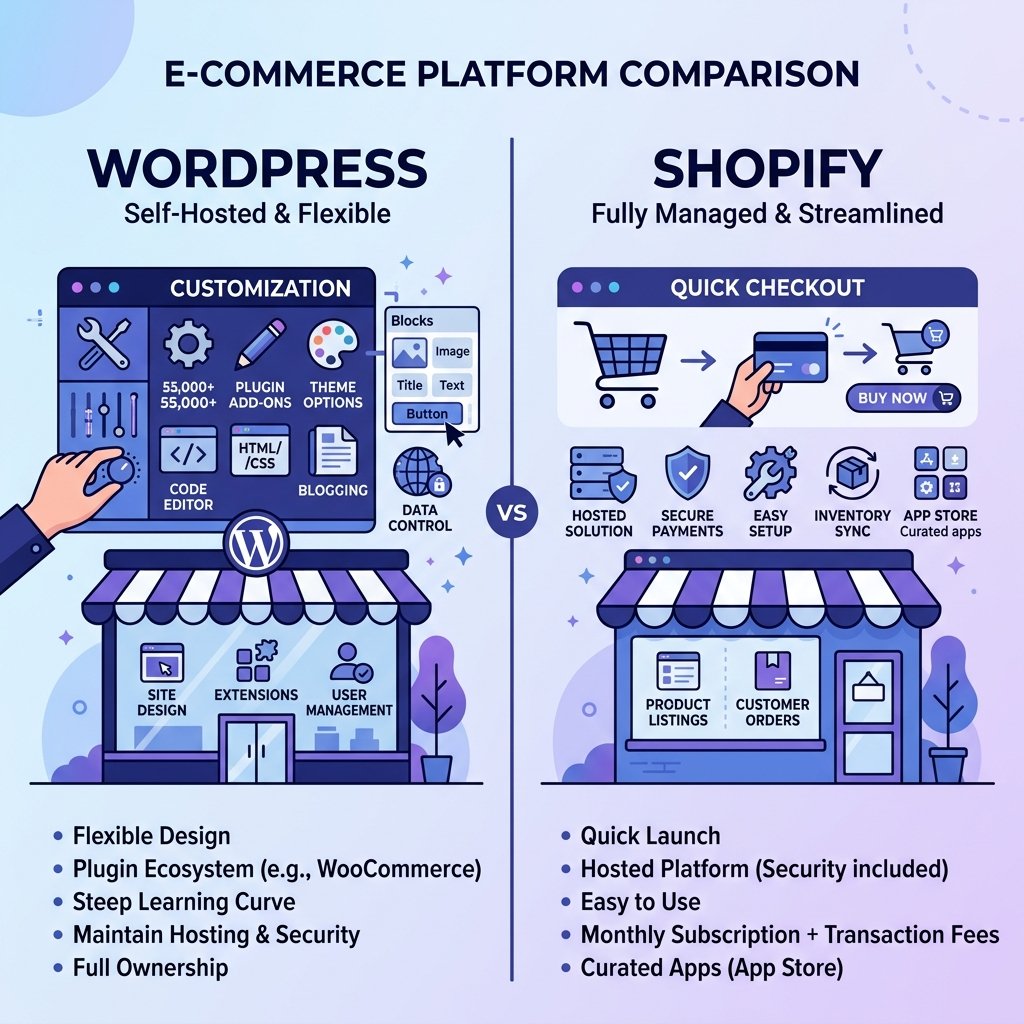
1. WordPress (WooCommerce): Power and Flexibility
WordPress is an open-source platform. Combining it with WooCommerce turns it into a powerful online store.
– Pros: Zero monthly platform fees, complete ownership of your data, unlimited design customization, and excellent SEO capabilities.
– Cons: You need to manage your own hosting, security updates, and backups.
For sellers who want complete flexibility and lower long-term recurring fees, a custom WordPress development service is the ideal path.
2. Shopify: Speed and Simplicity
Shopify is a hosted, all-in-one e-commerce builder.
– Pros: Quick setup, secure hosted server, built-in payment integration, and easy-to-use product manager dashboard.
– Cons: Monthly recurring subscription costs (starting at approx. ₹1,999/month), transaction fees if not using proprietary systems, and rigid design structures.
3. SEO Best Practices: WordPress vs Shopify
When comparing search optimization, both platforms can rank highly, but they require different setups. For WordPress, plugins like RankMath or Yoast give you deep, granular controls. For Shopify, implementing “seo best practices” shopify recommends includes writing custom alt tags for all product images, optimizing collection page titles, submitting a sitemap.xml via Search Console, and setting up clean URL redirections for discontinued products. Standard Shopify setups handle basic XML structures automatically, but custom content optimization is critical to rank.
4. Cost and Payment Gateways in India
Both platforms support popular Indian payment gateways like Razorpay, Cashfree, and Paytm, enabling local payment options like UPI and NetBanking.
– WordPress has lower ongoing costs since you only pay for hosting and domain renewals.
– Shopify has high recurring costs as your business grows, because app plugins and advanced features require higher monthly fees.
Conclusion
If you want a quick launch with minimal technical management, choose Shopify. If you want complete ownership, superior search ranking potential, and lower recurring operational costs, WordPress is the clear winner. Get a free e-commerce consultation with us to choose the right fit for your local retail business.